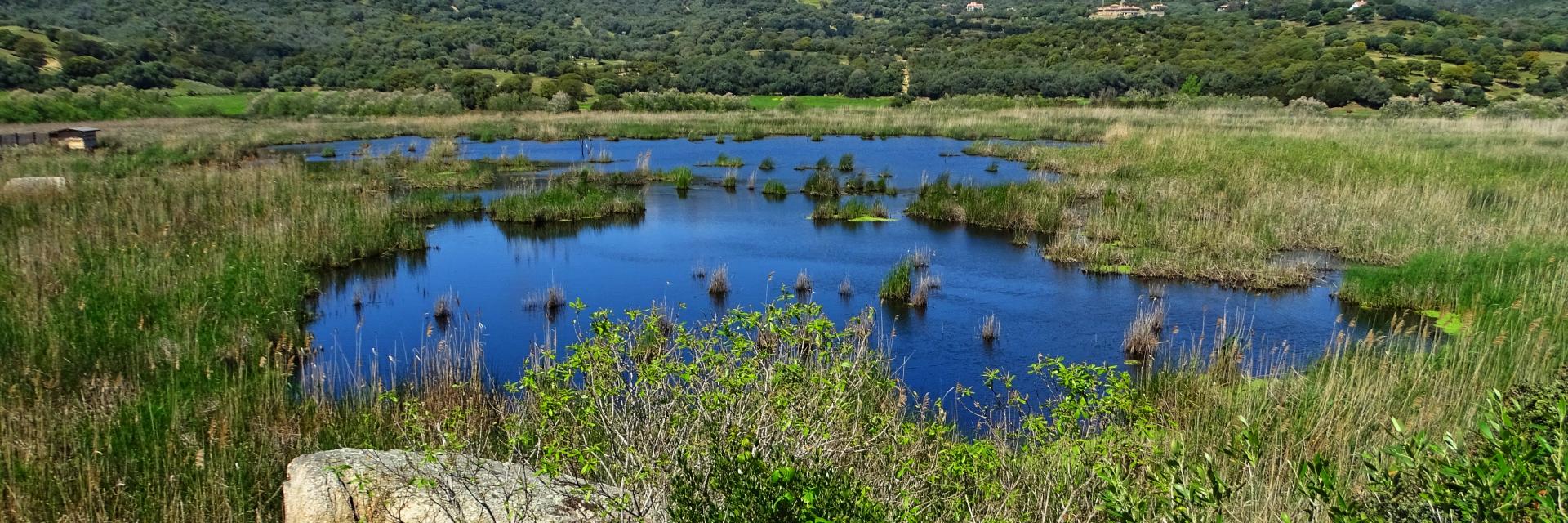
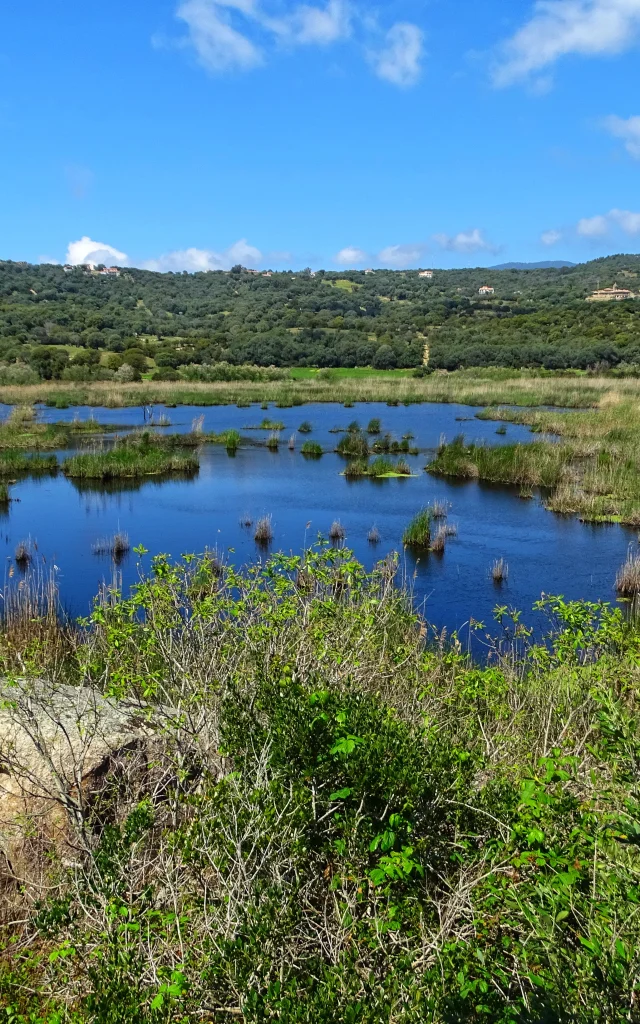
In the heart of the Serra-di-Ferro plain, not far from Porto-Pollo, the Etang de Tanchiccia is a haven of peace for nature lovers. Classified as a natural area of ecological interest, this protected site has an unspoilt atmosphere and an incredibly rich environment.
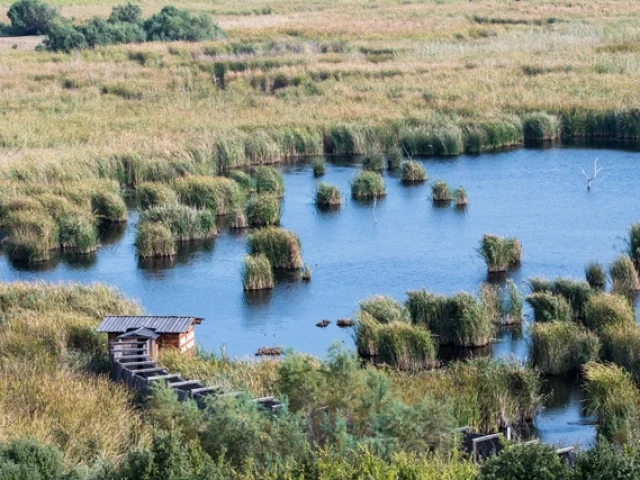
Here, the walk is gentle and immersive: wooden pontoons allow you to walk above the reed beds and wet meadows, offering a unique view of the flora and fauna. With a little patience, you can observe a multitude of migratory birds, as well as cistude tortoises, a rare and protected species that finds refuge in these tranquil waters.
Easily accessible, the pond is also an educational site, ideal for a family outing or a nature break during a holiday in Corse-du-Sud. Between the sea and the mountains, Tanchiccia is the perfect embodiment of that typically Corsican harmony between wild landscape, natural heritage and absolute serenity.
A site not to be missed by anyone wishing to discover Corsica in a different way, to the soothing rhythm of nature.
 Dsc04372 02
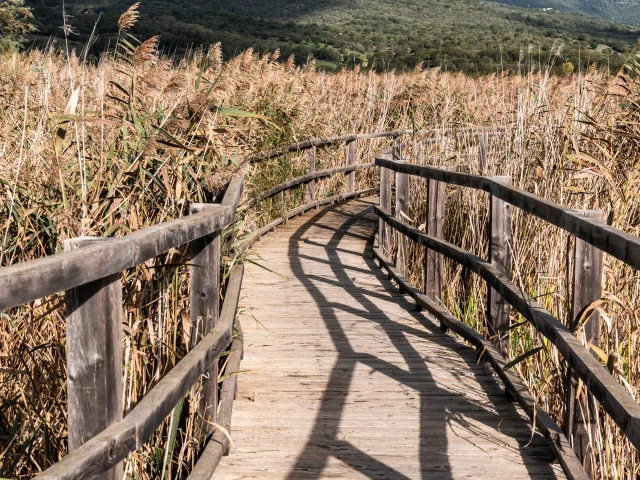 Walk on Letang De Tanchiccia
 Dl Hd Ld Tanchiccia Jpeg Copie
The Etang de Tanchiccia, covering an area of 28 ha, is owned by the Collectivité de Corse. It is located in the municipality of Serra di Ferro and is part of an 80-hectare Sensitive Natural Area; this area is listed as a type 1 Natural Area of Ecological, Faunistic and Floristic Interest (ZNIEFF type 1) and is part of the Natura 2000 network of areas, as well as being a remarkable coastal area. Fed solely by autumn and winter flooding from the Taravo, the Tanchiccia pond is at its fullest at the start of winter. It then gradually empties in the spring and is almost completely dry by the end of summer. What’s more, the Tanchiccia reed bed is the largest reed bed in southern Corsica! Punctuated by collections of water, pools and old drainage channels, it is a calm and attractive place for a wide variety of animal species, particularly birds.
Nearly 400 species of flora (around 8% of the flora of France!) have been inventoried, many of which have culinary or medicinal properties. Large populations of lizards and turtles, dragonflies and multicoloured butterflies, as well as grasshoppers and locusts, inhabit the reed beds and the scrubland around the edges of the ponds. No fewer than 148 bird species have been counted here to date, including 9 European herons. ¾ of these species are protected and more than half breed on the site.