




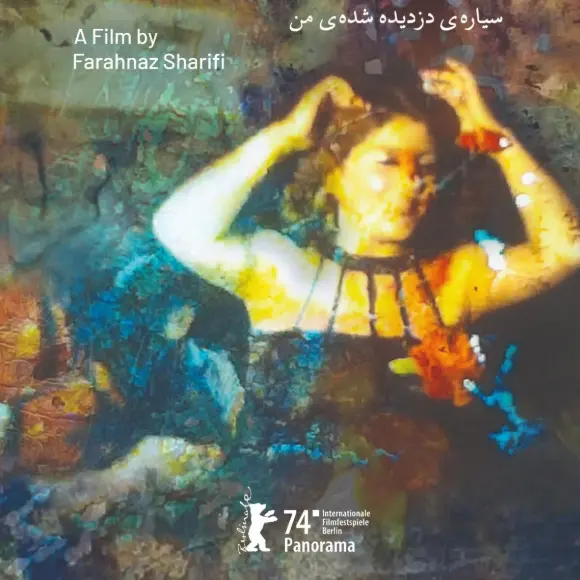
Best of Doc in Corsica #7 / Screening of the documentary film "My Stolen Planet" by Farahnaz Sharifi, at the Bilia village hall.
Summary:
"Farahnaz Sharifi was born on 8 March, a day now dedicated to feminist struggles.
In her case, she was born in Iran in 1979, three weeks after the Islamic revolution which, among other things, imposed the hijab on women.
Ever since her first veiled photo, she has understood the duality imposed on her gender and cultivated everything that belongs to the private, to her planet, filming what surrounds her, collecting and archiving all traces of freedom forbidden at a time when "even joy has become a crime".
These images from mobile phones and super 8 reels are a remedy against the oblivion imposed by the regime.
A new way of writing about the country that links those who remain to those who had to, or were able to, flee.
In this filmed diary, each image instantly becomes a trace of history, and filming everyday life becomes a powerful act of resistance.
The filmmaker's tour de force consists not only in making the voices of the women of the past heard, but also in making them resonate with those of the present, showing their bodies and their struggles, and inscribing their names alongside that of Mahsa Amini.
It's a colossal and deeply moving perspective.
Free admission.
Spuntinu, bring what you want
Summary:
"Farahnaz Sharifi was born on 8 March, a day now dedicated to feminist struggles.
In her case, she was born in Iran in 1979, three weeks after the Islamic revolution which, among other things, imposed the hijab on women.
Ever since her first veiled photo, she has understood the duality imposed on her gender and cultivated everything that belongs to the private, to her planet, filming what surrounds her, collecting and archiving all traces of freedom forbidden at a time when "even joy has become a crime".
These images from mobile phones and super 8 reels are a remedy against the oblivion imposed by the regime.
A new way of writing about the country that links those who remain to those who had to, or were able to, flee.
In this filmed diary, each image instantly becomes a trace of history, and filming everyday life becomes a powerful act of resistance.
The filmmaker's tour de force consists not only in making the voices of the women of the past heard, but also in making them resonate with those of the present, showing their bodies and their struggles, and inscribing their names alongside that of Mahsa Amini.
It's a colossal and deeply moving perspective.
Free admission.
Spuntinu, bring what you want